
By Sorayda D. León
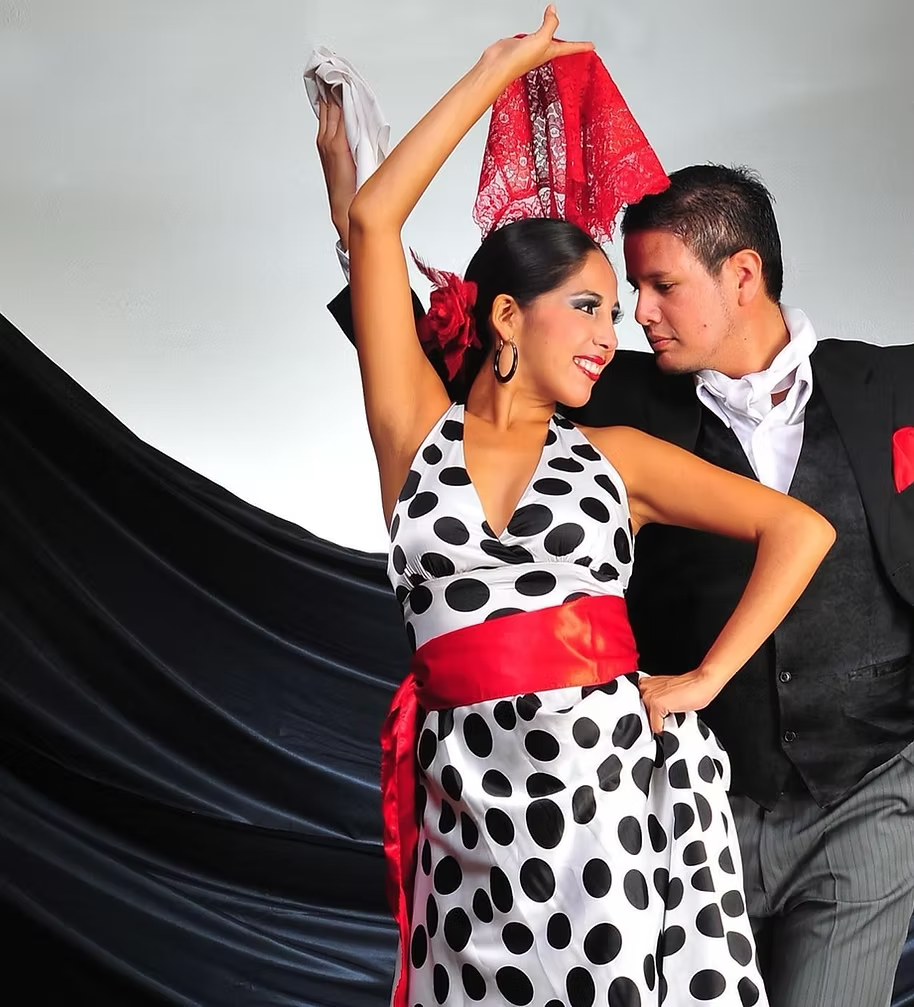
Ángela Castillo and Mauricio Salas have spent more than two decades building a life together amid performances, rehearsals, and cultural projects. They met at a dance workshop at university in Peru, and since then, dance has been a part of virtually every major milestone in their lives: love, friendship, family, children, and now their experience as immigrants.
Before moving to the United States, both of them already had extensive experience in cultural management and dance in Peru. But when they arrived in Charlotte in 2022, they planned to focus primarily on cultural projects and step back from the stage for a while. However, the city, the Latino community, and a series of coincidences eventually led them back to dance.
“It seems like they want us to dance here,” Angela recalls with a laugh.
And so a new chapter began for them: not only as migrant artists, but also as cultural advocates determined to build bridges between Latino communities through art.
Their stories are deeply intertwined with Peruvian culture. Mauricio worked for over twenty years in cultural management and artistic production in Peru, developing national and international projects. Ángela, in addition to being a communications professional, has been a member of dance companies since she was young. Together, they founded an artistic group in Peru that remains active today, two decades later.
Moving didn't mean giving up that experience, but rather figuring out how to turn it into something new.
They first arrived in Orlando, but after several visits to Charlotte—where part of Mauricio’s family was already living—they began to consider the possibility of settling down there. They discovered a Latino community that was small compared to those in other cities, but deeply active and with a real need for cultural spaces.
That is how Salas Agency was born—a platform created to promote Latin artists, connect cultural projects across cities, and develop shows that help highlight the talent of immigrant communities.
But the immigration process also had its difficult moments.
Both speak of the grief involved in leaving behind a life built up over the years. Friends, routines, professional recognition, cultural spaces, family. Everything changes. And often, the body keeps moving forward before our emotions can fully grasp what is happening.
Ángela especially remembers the emptiness of going from a life full of projects and activity in Peru to long mornings alone at home while her children were at school. “My world felt empty in that sense,” she says.
Mauricio, for his part, describes a sense of loss more closely tied to professional and cultural dislocation. His entire experience had been built around Peruvian culture. Moving abroad forced him to ask himself who he was outside of that context.
However, they both agree on one thing: art ended up becoming the tool that allowed them to rebuild themselves emotionally.
And dance reappeared, almost as if it were inevitable.

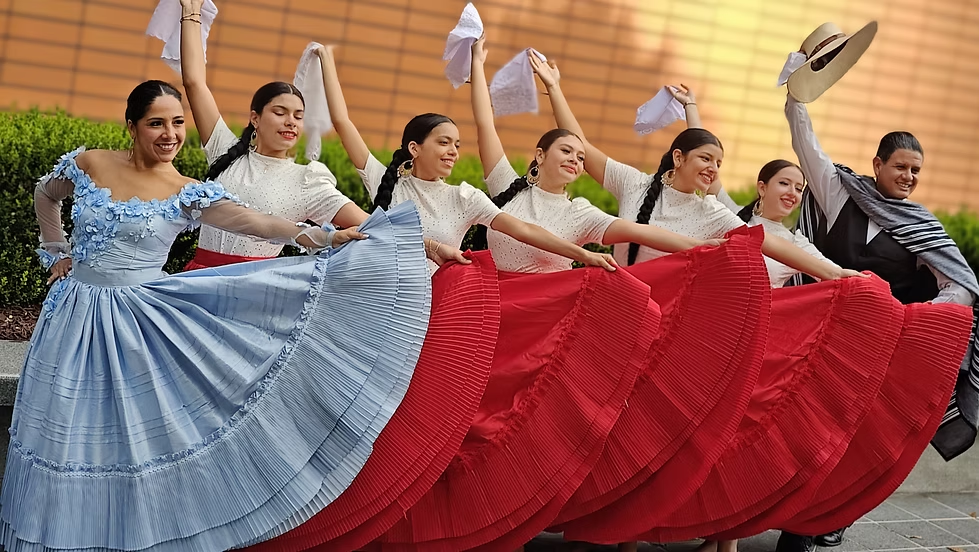
What began with small performances and competitions quickly grew. Today, they produce shows, participate in festivals throughout the city, and train new generations of dancers through Perú Expresión, a project that now also has a branch in Charlotte.
Her classes bring together young people from Peru, Colombia, and the United States who were born here, many of whom are discovering traditional Latin American dances for the first time. For them, that cultural exchange is precisely the goal.
“When you migrate, you’re no longer just Peruvian or Mexican. You become part of a larger Latino community,” says Ángela.
That vision is at the heart of everything they do.
Through educational programs and partnerships with other cultural organizations in Charlotte, they aim to show that dance can also be a form of remembrance and a sense of belonging. They don’t just teach steps or choreography; they teach stories, contexts, and roots.
They also work to help professionalize Latino cultural projects within the United States, particularly in cities where immigrant communities are still growing and do not always have strong artistic infrastructure.
Perhaps one of her most personal projects is *Memories of Peru*, a piece presented at Boom Charlotte that tells the story of her life and migration through five traditional Peruvian dances.
There is no dialogue. There is no verbal explanation.
Just movement.
The play tells the story of how they met, how they grew up together, how they emigrated, and how they tried to rebuild their lives emotionally far from home. And, as they say, many people were able to connect with the story even without knowing the dances or their cultural significance.
That's when they realized something important: dance has its own language.
One that can transcend borders, languages, and nostalgia.
When they talk to each other, you can still sense the bond between two people who have lived through several different lives together. They correct dates, finish each other’s sentences, and recall coincidences as if they were still discovering new connections in their own story. The show *Memories of Peru*, for example, ended up premiering on the exact same day as the couple’s wedding anniversary—almost without planning it.
And perhaps that sums up pretty well what they stand for.
Because beyond Peruvian dance, competitions, or cultural festivals, what Ángela Castillo and Mauricio Salas are building in Charlotte is a sense of community.
A reminder that moving to a new place can also mean rediscovering parts of yourself that you thought were lost.
And that, sometimes, dancing can also be a way to stay.
Learn more about the couple on their website
https://www.instagram.com/salas.art.agency/?hl=en
Learn more from Vozes de Expresión
Suscríbete y recibe las últimas entradas en tu correo electrónico.
Lo máximo!!!! Que orgullo para la familia Peruana 🇵🇪